As an Amazon and Walmart Associate I earn from qualifying purchases.
TL;DR:
Connect garden hoses, attach metal wands, and release trapped air before powering on the electric motor.
Apply soap from the bottom up and rinse surfaces from the top down to prevent permanent streaks.
Maintain a distance of 6 to 18 inches and avoid washing glass, electrical outlets, or composite decking.

Do you wish to thoroughly clean your home and car? Connect your garden hose to the pressure washer to provide water, then attach the hose and a coloured nozzle to the spray wand.
After filling the machine with water from the tap, turn on the machine’s power, and pull the trigger. The internal motor then accelerates the water and sprays it as a high-pressure stream.
You can clean your house and other areas using a variety of methods, as detailed in this guide.
As a permanent resident of Seattle, Washington, I have been following those guidelines to clean my home for over 15 years.
If you want to learn how to use a pressure washer, keep reading this blog and follow the guidelines to clean any surface.
Surface Cleaning Techniques
Before cleaning any surface, keep a minimum distance between the ground and your wand and adjust your spray nozzle accordingly.
Prep the Area First
Before you wash any flat surfaces, like the house, driveways, and other areas, provide a way for the dirty water to drain to clear the waste.
Test and Keep Your Distance
Maintain a clear distance of 6 to 18 inches from the ground when cleaning any surface. You can choose a low-pressure nozzle and move the wand closer to the surface to lift the stain.
The Soap Rule (Bottom Up)
When you use chemical soap on a wall, you must spray it from the bottom, because if you spray from the top, it will run down and cut permanent streaks into the dry, unwashed areas below.
The Rinse Rule (Top Down)
When you wash a surface with clean water, always rinse vertical surfaces from the top to the bottom. Ensure that your dirty water flows downward and does not waste any areas, and spray at a slight downward angle to avoid spraying water up.
Overlap Your Flat Passes
You should wash any flat surfaces, such as your house and driveways, from back to front to avoid dirt. Always overlap your cleaning passes by 50%.
Step-by-Step Power Washer Setup Instructions
Setup Tool
You want to set up your pressure washer to clean your house, garage, and car! You need to follow the steps below:
- Step 1: Secure your garden hose to the water pump on your pressure washer.
- Step 2: Connect one end of the heavy-duty hose to the machine’s pump and the other to your trigger gun.
- Step 3: Attach the long metal wand to your trigger gun, twist to secure it, and then pull back the wand’s collar to attach your preferred colored nozzle.
- Step 4: Before starting the machine, turn on the garden water tap.
- Step 5: Point the gun safely and squeeze the trigger for a few seconds to release trapped air.
- Step 6: Connect your electric pressure washer’s cord to a wall socket, then press the start button or flip the power switch to turn on the motor and begin cleaning.
Soft Washing vs. High Pressure
To wash your house and car, you must select between soft and high-pressure washing. Soft washing cleans a specific area of the surface, while high-pressure washing removes tough dirt.
The following two methods you could use to clean your house and car
High Pressure
Cleaning tool
Pressure washer
To wash your house and car, you can follow the steps below:
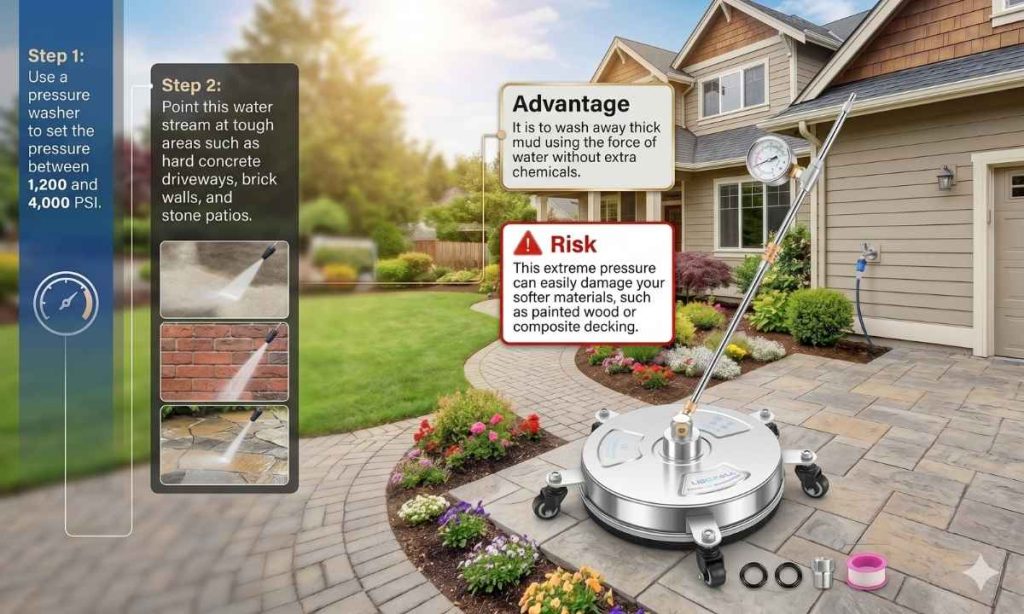
- Step 1: Use a pressure washer to set the pressure between 1,200 and 4,000 PSI.
- Step 2: Point this water stream at tough areas such as hard concrete driveways, brick walls, and stone patios.
Advantage
- It is to wash away thick mud using the force of water without extra chemicals.
Risk
- This extreme pressure can easily damage your softer materials, such as painted wood or composite decking.
Soft Washing
Cleaning tool
Pressure washer
To wash your house and car, you can follow the steps below:
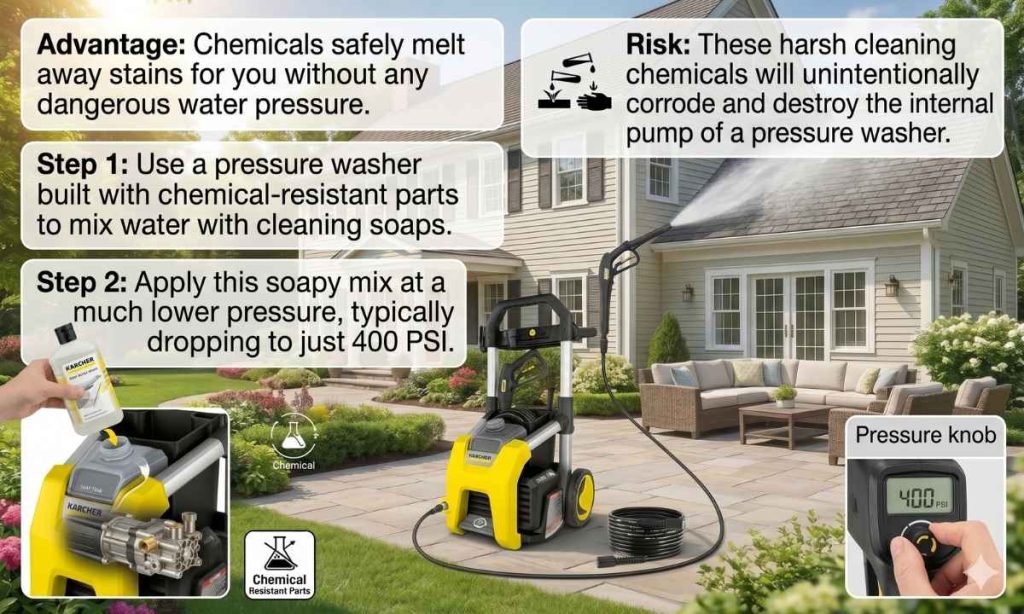
- Step 1: Use a pressure washer built with chemical-resistant parts to mix water with cleaning soaps.
- Step 2: Apply this soapy mix at a much lower pressure, typically dropping to just 400 PSI.
- Step 3: Spray this gentle wash onto fragile areas such as painted siding, roofs, and outdoor fabrics.
Advantage
- Chemicals safely melt away stains for you without any dangerous water pressure.
Risk
- These harsh cleaning chemicals will unintentionally corrode and destroy the internal pump of a pressure washer.
Step-by-Step Guide to Pressure Washer Shutdown and Storage
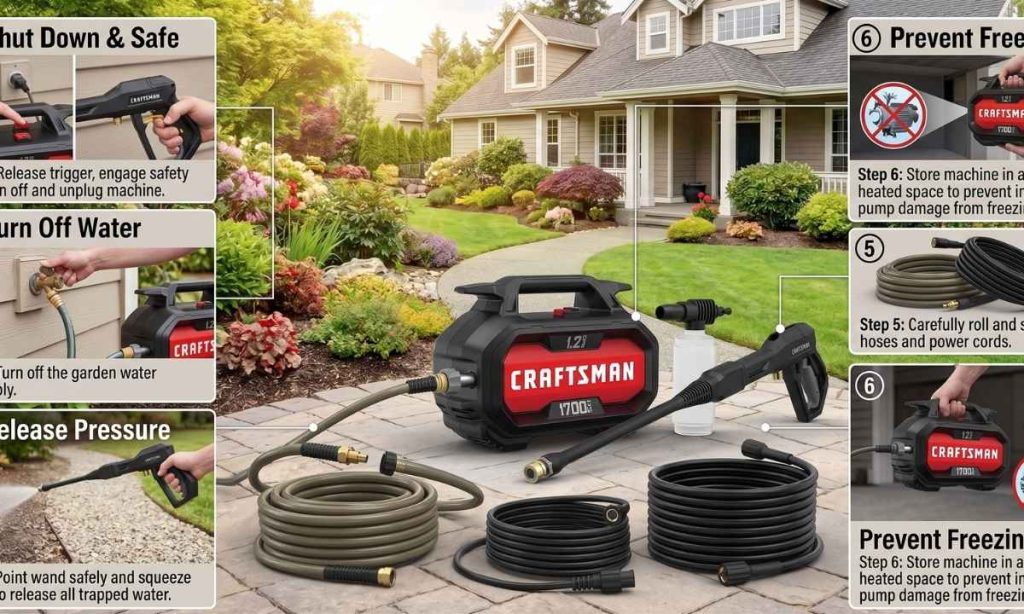
- Step 1: Release your gun trigger, engage the safety lock, and turn off the machine’s power before unplugging the power cord.
- Step 2: Go to your garden tap and turn off your water supply.
- Step 3: Safely point your wand and squeeze the trigger for a few seconds to push out all the trapped water.
- Step 4: After releasing trapped water from your pressure washer, unscrew and remove both your garden hose and the heavy-duty hose.
- Step 5: Carefully roll up your hoses and power cords.
- Step 6: Store your machine in a dry, heated space to prevent water droplets inside from freezing and breaking the internal pump.
Warnings for Pressure Washer Use: What Not to Wash
What You Should NEVER Wash:
- Avoid using your pressure washer on composite decking, as it may damage it.
- Water spray should be kept away from glass windows and lights, as it can easily break them.
- You should avoid spraying electrical service lines, outdoor outlets, and gas meters to keep yourself safe.
- Never point your wand at anyone, because it is not a toy and can easily break your skin, cause severe eye injuries, or ruin your feet.
Things to Wash with Extreme Caution:
- To clean your softwood, apply low pressure; high pressure may tear it.
- When washing your pavements, be careful, as high water pressure can blow out the sand filling the cracks.
- You must never force the water to spray upward to clean your home’s siding.
You can apply low pressure on cushions and pillows; otherwise, they will tear.
Important Operating Warnings:
- Because of the high water pressure, you should never use a pressure washer from a standing stool or similar device.
- Try to avoid the 0-degree (red) nozzle for general cleaning, as excessive water pressure can easily create a hole through fabrics.
- You should avoid using harsh chemicals in a pressure washer’s internal pump because they can damage the machine’s internals and break parts.
- You can wear heavy boots to protect your feet and safety glasses to protect your eyes.
FAQ of Heavy Duty Pressure Washer
How difficult is it to use a pressure washer?
It is not difficult at all because pressure washers are fast to set up, simple to operate, easy to control, and highly accessible and effective for homeowners.
What are the risks of using a pressure washer?
You may have severe physical injuries, such as broken skin, foot lacerations, or eye damage from flying debris.
Is 3000 PSI enough to clean concrete?
Indeed, a pressure washer machine that produces between 2,500 and 3,000 PSI, like LidoDola and several others, is highly recommended for cleaning brick, stone, and concrete driveways.
What not to do with a pressure washer?
- Never point the water pressure at people or pets.
- Never operate the machine while standing on a ladder.
- Never wash composite decking, windows, or outdoor electrical sockets.
- Never use the ultra-concentrated 0-degree (red) nozzle for general home cleaning.
What PSI is good for pressure washing?
- Pressure washer machines, such as Greenworks, that generate between 1,200 and 1,500 PSI are best for surfaces like aluminum siding, stucco, and soft woods.
- Westinghouse and other pressure washing machines produce 2,000 to 3,000 PSI, which is ideal for home maintenance, including standard siding and decks.
- Like many others, the Surface Cleaner Meteor Blast pressure washer delivers 3000+ PSI and is recommended for hard, long-lasting surfaces like concrete driveways, brick, and stone.
Is 3000 PSI enough to clean concrete?
Indeed, a pressure washer machine that produces between 2,500 and 3,000 PSI, like LidoDola and several others, is highly recommended for cleaning brick, stone, and concrete driveways.
Conclusion
Before turning on the machine, you should understand how to use a pressure washer. To protect your surfaces, use a wide nozzle and spray water from a safe distance. Thus, don’t point the water at anyone and always wear boots.
As an Amazon and Walmart Associate I earn from qualifying purchases.