As an Amazon and Walmart Associate I earn from qualifying purchases.
TL;DR:
Peppermint, clove, cinnamon, plus rosemary act as strong barriers using homemade sprays or fabric pouches.
Place these aromatic solutions near dark kitchen corners, entry gaps, and shelves to block mice.
Refresh applied smells frequently while sealing structural holes and keeping indoor food zones spotless daily.

Making mouse repellent at home is easier now. A good scent or spray works as a strong barrier. You can also use a pouch or a sound device easily. These few smart options stop them from entering your property.
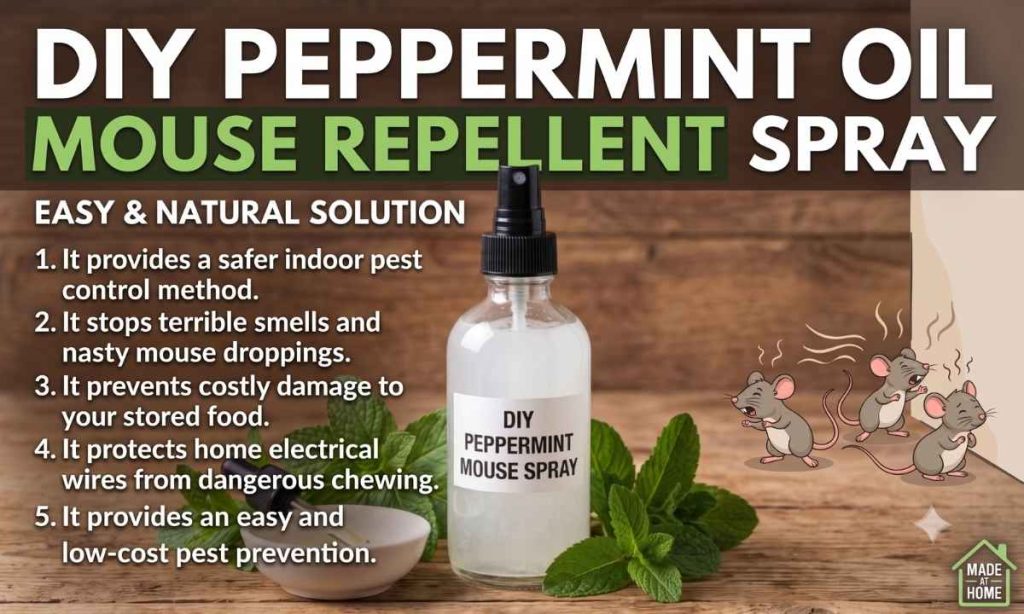
Those options stop the terrible mouse smell and nasty droppings inside and prevent food damage and dangerous wire chewing. This simple trick is effective for major health and hygiene concerns.
You can use mouse repellent in the home, kitchen, pantry, office, warehouse, garage, attic, basement, ceiling, and under furniture. These places are useful because mice like quiet, hidden, and food-friendly spaces.
From long-term home care experience, I have seen one clear thing. A single spray is not enough. You need a fresh scent, clean storage, sealed gaps, and correct placement to keep mouse away for longer.
To learn how to make mouse repellent step by step, keep reading this full guide. You can also explore more household products from homesdevice.com.
Difference between Natural vs Chemical Mouse Repellent
When Natural Mouse Repellent Is Necessary
A natural mouse repellent is necessary when you want a safer indoor method. Peppermint oil, clove, cinnamon, cayenne pepper, rosemary oil, vinegar spray, and scent sachets are good for kitchens, bedrooms, and pantry areas.
It is also useful when rodents are not yet highly active. You can use natural scent barriers before the problem becomes bigger. This works well near small gaps, cupboards, drawers, and food storage corners.
When Chemical Mouse Repellent Is Necessary
Chemical mouse repellent may be needed when mouse movement is heavy. This includes repeated droppings, wire chewing, and signs of nesting. In that case, use only label-approved products and follow safety rules.
It is also useful in warehouses or closed storage areas. These places sometimes need stronger control than homemade pouches. Still, ammonia and mothballs should not be used carelessly in open rooms.
Comparison table between natural vs. chemical mouse repellent
| Area | Natural Mouse Repellent | Chemical Mouse Repellent |
| Kitchen | Better for light prevention | Not ideal near food |
| Bedroom | Safer with careful placement | Avoid strong fumes |
| Office room | Good under desks and cabinets | Use only approved products |
| Store room | Useful for dry storage corners | May work in controlled spaces |
| Long-term result | Needs regular refresh | It depends on the product label |
| Heavy infestation | Not enough alone | Needs expert control |
Methods of Making Mouse Repellent in USA
Peppermint Oil Mouse Repellent Spray
Peppermint oil mouse repellent spray is easy to make at home. It creates a strong scent barrier around corners and entry points. This DIY mouse repellent spray works best when you refresh it regularly.
Materials Needed
- Water
- 10–15 drops peppermint oil
- Clean spray bottle
- Small funnel
- Mild dish soap, optional
Step 1: Mix water with 10–15 drops of peppermint oil. Add one small drop of mild dish soap if needed. It helps the oil mix better with the water.
Step 2: Pour the mixture into a spray bottle using a small funnel. Shake the bottle gently before each use. Spray near corners, entry points, cabinet areas, and under sinks.
Step 3: Reapply the spray regularly because the smell fades. Check the sprayed areas every few days. This method works best when paired with cleaning and gap sealing.
Cotton Ball with Essential Oil
Cotton balls with essential oil are useful for tight indoor areas. They are easy to place behind furniture, inside cabinets, and near hidden gaps. This method works well as a small scent barrier.
Materials Needed
- Cotton balls
- Peppermint oil
- Clove oil
- Rosemary oil
- Small plate or open pouch
Step 1: Soak cotton balls with peppermint, clove, or rosemary oil. Do not make them dripping wet. A strong but controlled scent is better for indoor placement.
Step 2: Place the cotton balls near mouse-prone areas. Good spots include drawers, cupboards, under sinks, and behind appliances. Keep them away from children, pets, and food.
Step 3: Replace the cotton balls when the smell becomes weak. In warm rooms, the scent may fade faster. Check them often to keep the repellent active.
Clove and Cinnamon Sachet Method
The clove and cinnamon sachet method is clean and simple. It is good for drawers, cupboards, and storage corners. This mouse repellent pouch gives off a warm, spicy smell that mice usually avoid.
Materials Needed
- Whole cloves
- Cinnamon sticks
- Dried rosemary
- Small fabric pouches
- Cotton string
Step 1: Put cloves, cinnamon sticks, or dried rosemary inside small fabric pouches. Do not crush everything into powder. Whole spices last longer and stay cleaner inside storage areas.
Step 2: Tie the pouch tightly with cotton string. Place it near doors, windows, cupboards, drawers, and storage spaces. These spots are common mouse travel paths.
Step 3: Check the sachet every week. Replace the sachet when the smell becomes light. You can also use these pouches alongside safe mouse repellent for better coverage.
Right Placement of Mouse Repellent in TX
Placement Inside the Home
Place mouse repellent in areas where mice usually hide, move, or search for food.
- Kitchen corners
- Under the sink
- Behind the fridge
- Behind the oven
- Pantry shelves
- Food storage areas
- Cupboards
- Drawers
- Under beds
- Under sofas
- Storerooms
- Near garbage areas
These spots are effective because mice prefer dark, quiet, and food-friendly places.
Placement Areas in Office or Shop
Place mouse repellent in office or shop areas before mice damage papers, wires, or products.
- File storage rooms
- Pantry areas
- Under desks
- Behind cabinets
- Near electrical wires
- Warehouse corners
- Delivery areas
- Packaging areas
These places need protection because mice can chew wires, damage files, and spoil stored goods.
Placement for Entry Points
Place mouse repellent near entry points to stop mice before they enter the main area.
- Windows
- Doors
- Vents
- Pipes
- Drains
- Electrical lines
- Attic gaps
- Basement cracks
- Wall holes
A scent barrier works better when these gaps are also sealed properly.
Duration of Several Mouse Repellents in CA
DIY Spray Duration
DIY spray usually works for 2–4 days because scent fades. You should refresh it every few days in busy areas. Focus on fresh smells, dry surfaces, and repeated spraying to protect homes, offices, and storage spaces.
Cotton Ball or Sachet Duration
Cotton balls and sachets usually last 7–14 days longer than spray. You should check them every week for scent strength. Those items’ durability depends on oil quality, room heat, airflow, and placement around cabinets, drawers, and dark corners.
Ready-Made Mouse Repellent Duration
Ready-made products can last 30–90 days longer than homemade products. Always check the product label for safe use. Those are useful when you need full coverage, less frequent movement, and good placement in offices, garages, and storage rooms.
You can pair a repellent with a smart home setup for alerts or sensor-based checking. This helps you notice activity faster in garages, basements, and storage areas.
Comparison Table for Type of Mouse Repellent
The following table shows different types of mouse repellent, methods, and the best placement for using mouse repellent:
| Problem Area | Product Type | Best Repellent Method | Best Placement | Approximate Duration | How Often to Check |
| Kitchen corners | DIY spray | Peppermint oil spray | Corners and baseboards | 2–4 days | Every 2 days |
| Under sink | Cotton ball | Peppermint or clove oil | Back corners | 5–7 days | Twice weekly |
| Pantry | Sachet | Clove and cinnamon pouch | Shelf corners | 1–2 weeks | Weekly |
| Bedroom | Sachet | Rosemary and cinnamon pouch | Under bed area | 1–2 weeks | Weekly |
| Office room | Cotton ball | Essential oil cotton ball | Under desks | 5–7 days | Twice weekly |
| Store room | Ready-made pouch | Long-use repellent pouch | Door and corners | Label-based | Weekly |
| Garage | Spray and pouch | Peppermint spray plus sachet | Entry points | Mixed duration | Twice weekly |
| Warehouse | Ready-made product | Label-approved repellent | Corners and stock zones | Label-based | Weekly |
Tips for home depot mouse repellent
Act Fast
You should act to defend your living space. This stops quick breeding, prevents bad diseases, and saves costly food. You can spot a good floor sweeper to stop nasty droppings.
Seal Gaps
You should close every tiny hole in your house immediately. This blocks physical entry, maintains indoor warmth, and stops new pests. An effective apartment safety kit perfectly monitors all vulnerable entry points.
Stay Clean
You need to wipe down your kitchen counters every day. This removes food sources, spots droppings early, and improves family health. A spotless house makes your natural scent barriers work better.
Check Often
Please check dry scent pouches every few weeks. This ensures scent strength, finds hidden nests, and gives total peace. Regular checks keep your barrier protective with the highest power.
Use Safely
Place harsh chemicals far away from common areas. This protects small pets, keeps children safe, and avoids toxic air. Careful placement prevents dangerous accidents inside your beautiful home.
What smell keeps mice away naturally?
Peppermint, clove, cinnamon, and rosemary can help. Customers buy mouse repellent for food protection and cleaner rooms. These scents work better when placed near gaps and corners.
Does peppermint oil mouse repellent really work?
It can help with light mouse activity. Customers choose it for easy home use and low-cost prevention. It needs regular reapplication because the scent becomes weak.
Where should I place mouse repellent?
Place it near entry points and hidden corners. Customers need it for wire protection and droppings control. Focus on kitchens, pantries, under sinks, and storage rooms.
How long does homemade mouse repellent last?
Spray may last a few days, while sachets last longer. Customers buy repellents for steady coverage and less daily stress. Always check the scent strength weekly.
Is natural mouse repellent safe for kitchens?
Yes, when placed carefully away from food. Customers prefer it for safer indoor use and better hygiene. Keep oils, spices, and pouches away from children and pets.
Conclusion
Read this helpful guide and learn How to make mouse repellent inside your house now. Readers gain safe indoor methods, easily discover exact scent placements, and plus track effective usage durations. Protect beautiful living spaces naturally.
As an Amazon and Walmart Associate I earn from qualifying purchases.